Introduction
A Doctor of Philosophy (PhD) is an arduous and time-consuming journey fraught with uncertainties. At the same time, given that only about 1.3% of adults hold a PhD based on a 2021 projection from OECD countries, those pursuing a PhD (henceforth termed PhDs) tend to be the only ones within their social circles. Further, while they are often seen as a university student and not as working adults, in actuality the social position that PhDs occupy is somewhere in between the two.
In fact, while many PhDs have ‘student’ loans and go through some program modules, the expectations are far higher than in undergraduate or masters programs. A PhD is often tasked to execute tasks related to their advisors’ research projects, almost like a Research Assistant. Their own PhD research may also be a component of their supervisors’ broader research project, especially if funding for their PhD came from the advisors’ research grant. This means that the role vis-à-vis their advisor can overlap into an employee-employer relationship, even when a major purpose of pursuing a PhD is to learn the skills needed to be a competent researcher. This niche position can mean that understanding about the PhD experience, and hence the knowledge of how to support a loved one pursuing a PhD, is lacking.
In the digital age, the proliferation of various social media pages and media platforms related to the PhD experience is evidence of PhD students’ need for their experiences to be validated. However, the audience for such content might still be confined largely to PhDs.
The paper here uses a case study (n=1) approach to examine the microsystem (Bronfenbrenner, 1974) support (or lack thereof) given to a PhD student. According to Bronfenbrenner’s ecological model, a person’s microsystem is the milieu in which the person has daily interactions. As the paper is focused on microsystem support, only implications for the microsystem from the analysis are presented.
Case Study
The case here is an almost-PhD graduate. Specifically, she has gotten a “Resubmission of Thesis without Re-examination” from her viva. Her programme is 4-year long and fully funded, which she is always thankful for. Similar to most PhD students, her programme is outside of her home country. However, she is only 4 hours by budget flight away, a privilege that many do not enjoy.
Complicating factors that were unique to the case were: social unrest and the COVID-19 pandemic. These have to be factored into the interpretation of the findings.
Reflexive journal on both the PhD project and personal life was kept throughout the course of the programme. Qualitative analysis was done on the journal entries to identify the case study’s microsystem and emergent themes related to perceived support.
Microsystem Analysis

Figure 1 above depicts the significant relationships in the case study’s microsystem. As can be seen, the microsystem does not solely consist of PhD-related relationships. In fact, the other relationships can have more bearing on the perceived support of the case study. Salient themes for each significant relationship will be discussed next.
Below is a summary of the findings:
- Parents: A Rock without Cushion
- PhD Peers: Different Boats Buffeted by Similar Winds
- PhD Advisor: Laissez-faire Rudder
- Social Media: Pretty Seaweed
- Partner: An Island with Frequent Rain
- Friends: Friendly Dolphins
- Church: A Mostly Sunny Island
Parents: A Rock without Cushion
The parents were an important source of instrumental support, as the student could count on a secure home environment and know that they will be there if ever s**t happened to her finances. Further, their financial, health, and marital stability was a source of comfort for the student as that meant she could pursue her PhD without worrying. At the same time, the parents did not really understand the nature of the PhD programme or LDR (more under Partner), resulting in some questions that vexed the student when she was stressed or anxious. The lack of discussions on emotions in the family also meant that the case did not receive much emotional support from them.
PhD Peers: Different Boats Buffeted by Similar Winds
The student’s PhD peers provided a much-needed source of ‘insider empathy’ given that the case was the only one amongst her peers who was pursuing a PhD. They could relate to the unique worries about her research and struggles with the programme/PhD advisor. In that sense, there was a kind of camaraderie, even though each person was on a different boat and journey of their own.
PhD Advisor: Laissez-faire Rudder
In her first year, the student was really trying very hard to steer the boat in the right direction with the laissez-faire rudder. This resulted in intense stress and anxiety in the first year, where she felt she could have been better supported. A caveat would be that it could stem from her own personality responding to the circumstances of a (very busy) PhD advisor. Journal entries over the years reveal the theme of ‘high autonomy, high expectations’. This appeared to suit her better as she adapted to the working style of her PhD advisor, and she even relished the flexibility and trust given to explore, together with the high expectations set.
Social Media: Pretty Seaweed
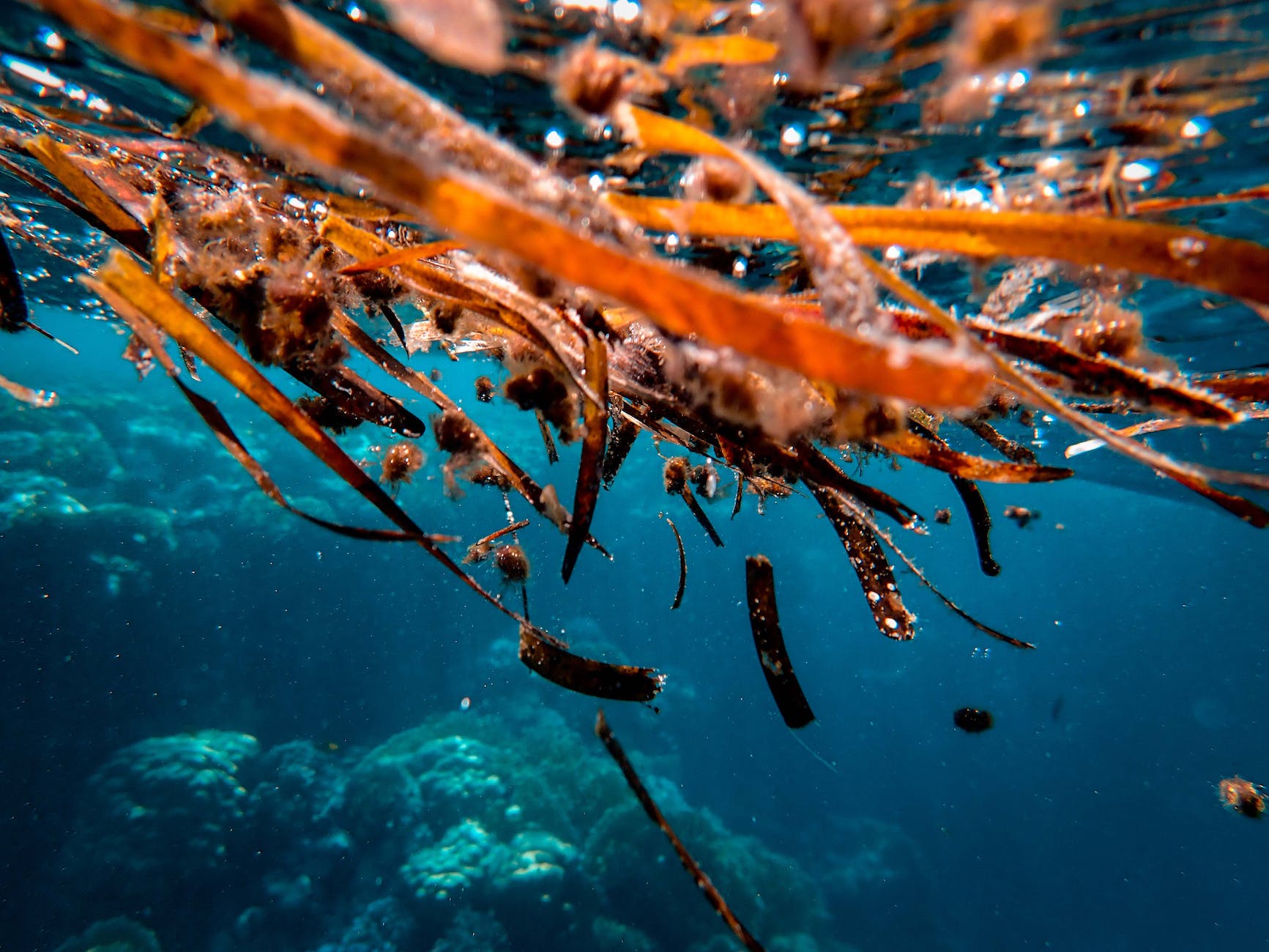
As with the pretty seaweed in Figure 2 that are lovely to look at but useless in steering one’s boat, so was social media. The student frequently found that while social media provided an oasis of distraction from the toil of the PhD, it could also derail her emotions if she was not careful to guard against social comparison. Even so, social media allowed opportunities to keep in touch with old friends and build connections with new ones. The many memes on PhD Comics and other social media forums provided a much-needed empathy and articulation of the unique feelings and thoughts as a PhD student.
Partner: An Island with Frequent Rain
While the PhD programme was tough, it was the LDR with her partner that was associated with mention of thoughts to ‘give up’ the programme in the journal entries. The LDR appeared to put a strain on the relationship, even though her partner was an important source of emotional support for the case. She frequently confided in him and the daily text exchanges was a significant social lifeline in the PhD life where she worked alone on for days without talking to anyone.
Friends: Friendly Dolphins

The warm feelings of connection evoked by the dolphins swimming alongside in Figure 3 represent the significance of the case’s friends. There was a repeated theme of gratitude for the listening ear, counsel and encouragement given by friends. However, the metaphor of dolphins was used for this significant relationship in the microsystem because there was a gap to fully understanding what the PhD entailed and thus a lack of ‘intuitive understanding’ like one would experience with like-minded colleagues.
Church: A Mostly Sunny Island
Church was given the metaphor of a mostly sunny island because going to church was associated with positive experiences of socialisation, meaning-making of life as a PhD student through her Christian faith, and being able to relax without thinking about the PhD.
Discussion and Conclusion
It was striking that the themes centred around sea-related metaphors. It could be due to the fact that undertaking a PhD is akin to a novice travelling out to sea on a boat. While the PhD student can do whatever they can to learn how to steer the boat well, there are various things beyond their control. Examples range from not being able to gain access to the intended research sample or meeting the needed sample size for analysis (both of which happened to the student), to emotional turbulence from interpersonal interactions that affect the PhD journey. It cannot be understated how important the microsystem relationships are in their journey.
P.S. Though it is obvious, I would like to underscore that this is NOT a preprint/ journal article 😂. Although I would appreciate if any references to this article cite it as: Wong, K.L. (2023). Supporting PhD Students: A Case Study. Social Working, Everything.
https://www.socialworkingeverything.com/2023/10/14/supporting-phd-students-a-case-study/
 Social Working, Everything