After My Liberation Notes, here I am with another Kdrama rave 😍Other than Hospital Playlist (which I haven’t gotten over), I believe this will go down as a cherished Kdrama that I daresay has shaped me as a person.
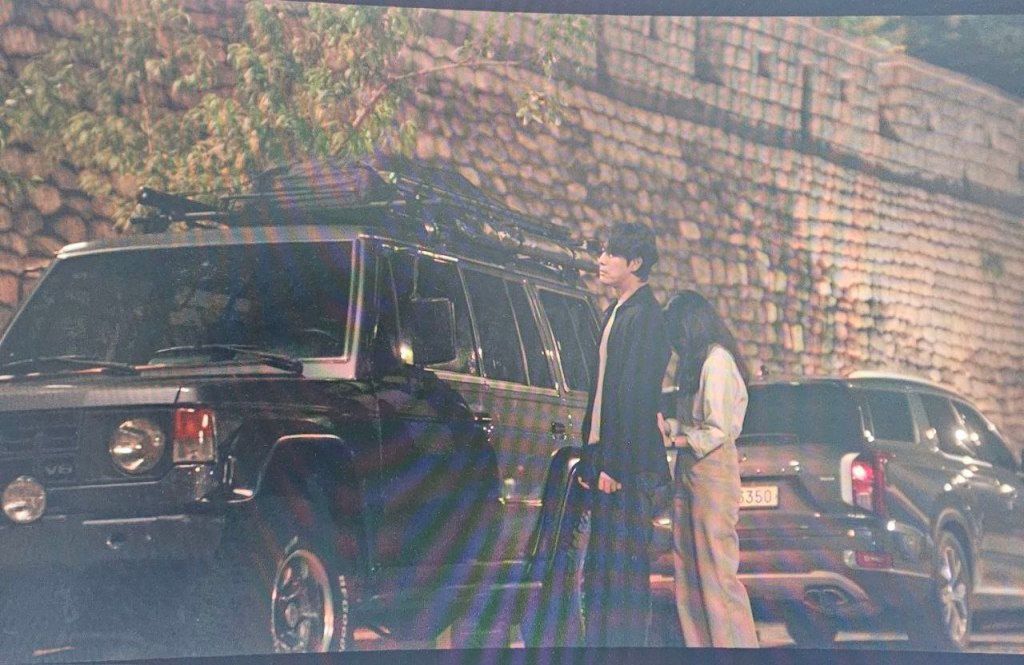
The above image is from an episode titled Tears, which I daresay will go down as a classic scene: of tenderness, wordless communication beyond hearing and speaking abilities, and the beginning of a soul friendship.
One big reason why I love this drama even though its just 4 episodes in: it tenderly illuminates the struggles of the deaf/hard-of-hearing community in a loud and impatient world that is too quick to judge. It reminds me of the power of artistic expressions to appeal to the pathos of the audience, hence bringing the message down from the head to the heart.
[Spoilers ❗] In one scene, Cha Jin Woo fails to hold the lift door for someone despite the person’s shouts. The latter guy gives him a sideward look when he entered the lift. Afterwards this same person was reluctantly introduced to Cha Jin Woo, is a prolific painter, whose works he admired. When Jin Woo shared that he is deaf, the whole attitude changed to that of embarrassment.
I appreciate the cinematic storytelling (Wong Kar Wai feels!!) that shines through in scenes like the two I mentioned above, it does so much more to increase my empathy for the lived experiences of a deaf person trying her best to listen and communicate care, then any direct messaging can.
An important supporting character is Jin Woo’s childhood friend, Hong Ki-hyun. Ki-hyun embraces Jin Woo’s limitations and speaks with sign language. In one poignant scene, Jin Woo tells him that he feels so proud of himself that he could understand Ki-hyun despite his bad signing 🤣
It blows my mind how some scenes are almost silent, with the sound tracks playing at a minimal volume background. It forces the viewer to zoom in on the sign language and gives a glimpse (albeit limited) of what it is like to be deaf. In one scene, deaf students of Jin Woo joke around and it was HILARIOUS. There were no spoken words, almost no music, just the sign language and expressions.
More seriously, this opens up the question of: How often do typical people (like myself) learn to communicate or work with people who are not ‘typical’? Or do we just expect them to fit into ‘our typical world’, when they can communicate ‘perfectly’ in the way that suits them best?
These are sobering questions to reflect on as a social worker. In a culture that prioritises efficiency and speed, I have to confess that at times I have gone along with the flow. Be it cutting corners in speaking purely English (or Singlish) so that all listeners in the social group can understand, or putting ‘subtle’ pressure on the senior walking way too slowly in front of me by tailing her closely, I know I can do better.
If you haven’t noticed, this SWE blog is intentional about communicating values of inclusivity, community, and dignity of persons. TMYLM ticks all these boxes, and I do hope I can continue raving about it in the episodes to come- can’t for the the next 2 this week 😍 Hope you have been bitten by the TMYLYM bug!
 Social Working, Everything