What follows is a raw synthesis of my hurried, functional readings on money (This is a write to think kind of post) –
In titling the piece as such, I believe the key to understanding money and finding solutions to the issues it has contributed to is that money is seen as a currency, among other forms of currency. Importantly, the position of money as a currency of power is intentional to emphasise the pervasive ways it shapes our economies and personal lives. Much like how a fish takes the water it swims in as an assumed, unquestionable part of the world it inhabits, modern societies have taken the existence and use of money as THE currency to be an unshakeable assumption of living and survival. In Singapore, the ingrained worldview is: No work, no money, no eat. Indeed, religious texts seem to support this, e.g. “if anyone is not willing to work, let him not eat” in the Bible. At the same time, the analogy of fish in water applied to societies run with money is flawed. A fish cannot live outside of water, but society has existed without money.
Before I continue, it is good to clarify that I believe money in itself is a neutral tool. Before money came to be used as a medium to exchange goods and services in an organised, large scale way amongst people, there were other means through which people came to be indebted and came under debt bondage. This was another source of oppression. In principle, money could also be a means for fair, reciprocal exchange as opposed to a loose arrangement of reciprocity. For example, instead of helping to clean your house in return for mowing my lawn at a later date, I can use money to account for what I should be getting for helping to clean the house. As long as everyone in the system agrees that this currency used (be it leather tokens, cowrie shells, or paper money) has ‘authority’, then the system works. This is also assuming that the supply (creation) of that currency is based on fair and just principles. This is where problems come in. Who decides the supply of leather tokens in circulation, and what are the principles that regulate this supply?
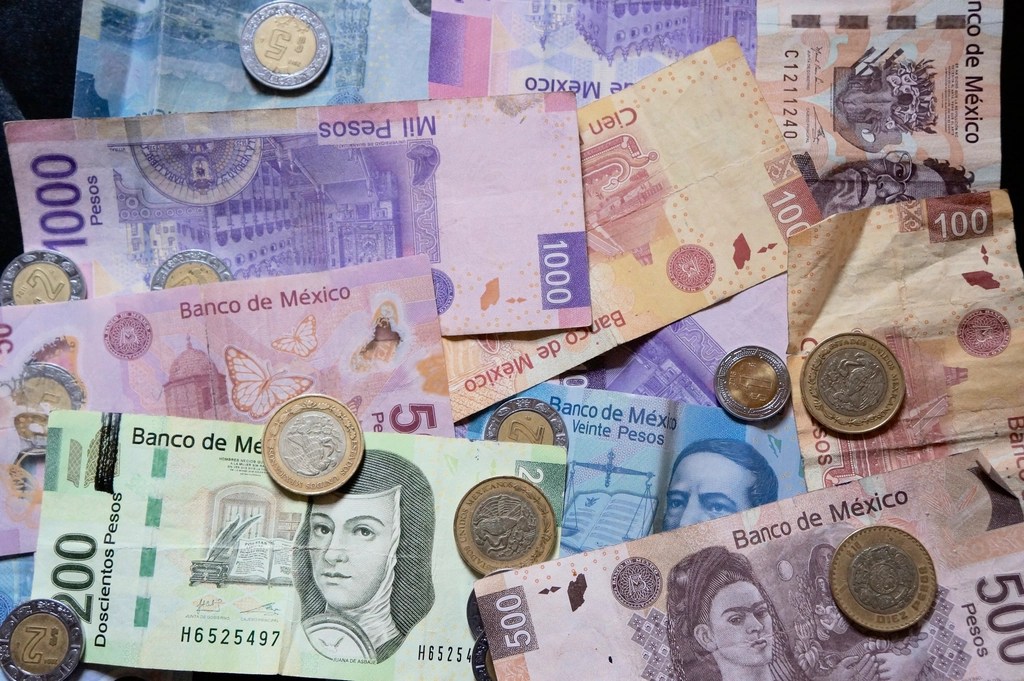
In our capitalist society, money is mainly created by commercial banks lending money. The problem comes when economic growth becomes an imperative- increased production of goods and services are needed because people/businesses need to earn more income to pay back the money with its interest (i.e. more money than was created).
The value of things then is placed solely on “how much?” A prime (almost ironic) example is the Social Return on Investment framework – because certain outcomes have no market value, it attempts to fix a monetary value on things like psychological empowerment or environmental protection. In that way, these essential things that contribute human flourishing and planetary care are relegated to public and charitable sectors to fund rather than being at the centre of economic activity. In this, market value is placed as the definitive reality of what is of value and shapes our ontologies- the way of being, and what we are becoming. We can observe its effects in our everyday interactions – our subtle social comparisons of salaries and corresponding differential respect accorded to the one who earns more (i.e. more competent/capable), social signaling through a certain ‘look’ that conveys a level of respectability (which you need enough money for), and how we look at financial aid both as recipients and as the onlooker society.
In financial aid given to the ‘poor’, money takes on social meanings that exert tangible impact on people. In the Social Meaning of Money, Zelizer (1994) writes that “In the hands of the morally incompetent poor, experts have declared, money could turn into a dangerous form of relief, easily squandered for moral purposes.” (p.120-121) 30 some years later, this narrative is still present in our social service agencies and policymaking. Economic transfers tend to have guardrails to create a kind of benevolent/directive currency that allows service users to use it in the intended ways that are good – children’s education and development, spending on household necessities, moving towards stable employment etc. On the other side, recipients of such charitable money can see this as stigmatised money which reinforces the narrative of moral judgement on the ‘poor’ as having a set of individual deficiencies that led them to be mired in this situation. This conscious exertion of power through money by charitable/social welfare organisations highlight the narrative of the ‘worthy poor’ who have met a certain criteria in terms of personal attributes and life circumstance for receiving financial aid. The underlying logic spotlights the role of individual responsibility, while the environmental hurdles towards financial sufficiency tend to be in the shadows.
I see a link between this underlying logic and the nature of money in society. Since money is created, how it is created is an important question. Finance is then the (re)distribution of prior existing money. I quote directly from Mellor (2022): “The claim that public expenditure cannot be afforded because there is money is based on a number of myths, the two key ones being that money is essentially scarce and that it is generated exclusively by the market. (p.224)” I believe this challenges unquestioned assumptions that feed into the underlying logic of individual responsibility being the primary reason for poverty and debt. If we believe that money is mainly created by economic activity, our existence, relation to each other as humans, and our relation to the environment (Creation, if you will), is all ultimately valued by economic value. This brings to mind a social worker in my research who expressed that ‘free money’ should only be given to clients if it helps them to be of use and create value for the whole society. This was said in the context of clients becoming contributing volunteers to the centre programmes. I agree that there should be discretion in how money is redistributed, but I also wonder if what the social worker implied is ‘fair’.
Market priorities determine the creation of money by banks making loans, its supply and distribution. Hence, the market has the power through money to value certain things over others. What is essential, like caregiving of dependents, becomes an externality in the language of market economics. This economics abnormalises and penalises those who are unable to participate naturally or fit in well in this market logic. This is a tremendous psychological burden to bear, to live as a ‘deviant’ in a capitalist society. Further, if we understand that money is created through debt, which generates inequality through money flowing to those most able to pay, AND how money (and the lack thereof) affects our whole being, I guess an important part how to promote wellbeing for the ‘poor’ should be to understand how all these systemic forces affect their lives.
I find it important work to call out what is normal and taken for granted as the world we inhabit, to get people to rethink their sentiment of ‘this is how the world works, you just have to find a way to survive/thrive in it’. In that sense, returning to the social worker’s sentiment, I believe that most individuals desire to be of use to others and contribute in some way. Perhaps the step to make lives worth living is to create alternative economies where people can breathe more freely and not feel so hard-pressed to be productive as human capital to play in the market economy.
That is why I am really curious if and how timebanks and alternative currencies can work in Singapore, to honour and keep things of value and that contribute to wellbeing circulating within the community. Could they create a more freeing space in people’s lives?
 Social Working, Everything