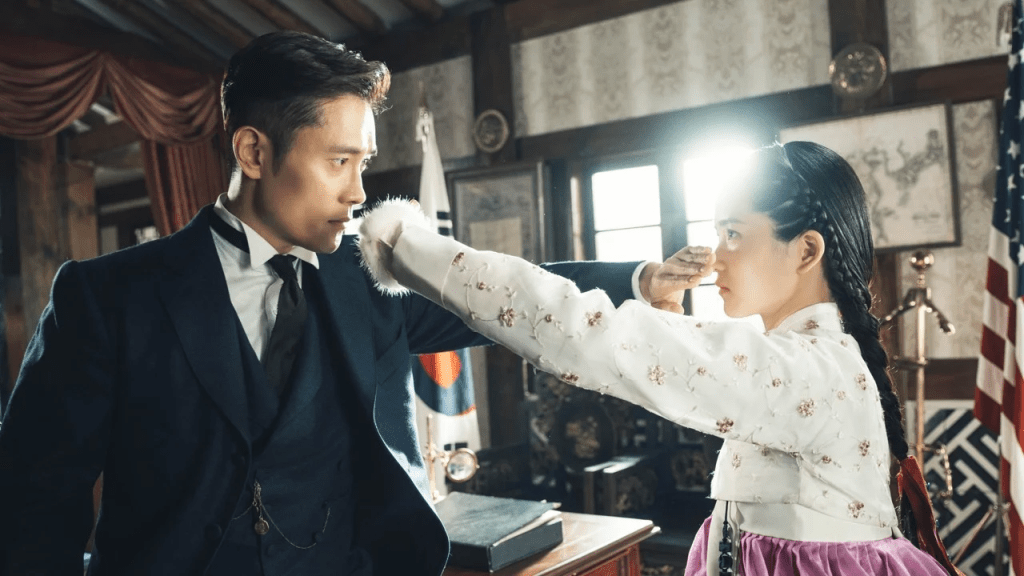
There are few Kdramas that linger powerfully in my mind, as few can achieve the perfect ideal of having both excellent cinematography and meaningful themes involved. Mr. Sunshine is one of these. I’ve had this as a draft post from since my PhD days when I watched this Kdrama and it gave me the needed inspiration and push to power through the often-lonesome research process.
As far-fetched as it can sound to draw lessons on civic participation and civil society from Kdramas which many equate to brainless entertainment – certainly that’s the function of Kdramas for me – Mr. Sunshine moved the depths of my spirit of its portrayal of characters caught up in their quest to defend Joseon.
Below are some ‘takeaways’:
The power of one
Each of the main characters: Eugene Choi, Goo Dong-mae, Kim Hee-sung were cast as unique/non-conformist to their social class/backgrounds. Their actions were shaped by their life experiences and the decisions they took stemming from beliefs molded by these experiences. Eugene Choi for example was born to slaves and witnessed his parents getting beaten to death. He escaped Joseon and came back harbouring deep hatred for Joseon- the social structures that enabled slaves to be treated as dispensable objects and determined their worth.
This hatred is however complicated by his relationships with Lady Ae Sin, Potter Hwang and others whom reshaped his ‘experience’ of Joseon. He chooses actions that work for Joseon and in the process contributes to the broader struggle as these actions in turn influence others. The power of one is portrayed very realistically as each make their own stand, be it for love, for revenge, for their country – and draws others into the process. I think many social processes and thus sociology, trace back to relationships. Therein lies the power of one. The concepts of relational empowerment, collective efficacy, sense of community, all rest on person to person relationships.
I’m also reminded that motivations for civic participation are often mixed and if one were to use a value judgement, not entirely altruistic. Sociocultural and economic conditions are equally important determinants for participation which policy makers ought to pay more attention to. For instance, proximity and social networks that create meaningful opportunity structures for participation.
Know what you are fighting for
Lady Ae Sin, the central character in the story, is depicted as a passionate and pure noblewoman going undercover as a man to fight the foreign interferences crippling Joseon. She is kind to those beneath her class and strives to be a benevolent noblewoman.
Ae Sin’s uncomplicated world collapses when Eugene Choi reveals his family origin. She’d assumed that he was from a noble family and interacts with him based on that assumption. The revelation drives a crack in her solid passion to defend Joseon.
What was the Joseon she was fighting for? Is it a Joseon for slaves and for butchers (who’re publicly disdained)?
That episode made me reflect a lot on the tension and irony of civic participation. Do we inadvertently end up maintaining the systems that actually do not work for some segment of society? What are some unquestioned assumptions or knowledge gaps on the current social norms and the (better) alternative social norms?
There were some other half-formed thoughts but I shall not force it into a three-point post. Thanks for reading! Side quest for the work day completed.
 Social Working, Everything