[17th International Conference of the International Society for Third-Sector Research (ISTR)]
While the Voluntas journal has been a key reference source throughout my research journey, this is my first ISTR conference. I came slightly apprehensive yet expectant, hoping to takeaway concrete social innovation ideas for my action-oriented work as a Research Fellow in the Policy Lab unit of the Institute of Policy Studies. I was disappointed in that regard.
Instead, my mind was reacquainted with the process of interrogating the world, theorising social phenomenon to create knowledge, and the importance of (different ways of) knowing that precedes action. An academic I met at one of the lunches said that the presentations in ISTR merely accounted for just 20% of what you got from the ISTR experience – it was the networking that happens at lunches and coffee breaks that form the ideas exchange and collaborations that formed a huge part of what the conference meant to him.
I both agree and disagree. There have been a few standout presentations that have given me food for thought. As mentioned, since I’m in the business of testing and implementing solutions, at times in the thick of things it feels like the knowledge creation work is put on the backburner. The presentations on cooperatives – phases of organisational identity, the social and solidarity economy in different contexts, and intersectoral collaborations between the government and third sector – all these both drew and expanded the boundaries of my thinking on these topics.
A little elaboration on the drawing and expanding of boundaries in thinking – the presentations gave the vocabulary and language to describe what was happening in my own local context. An example was the presentation examining power shifts in participatory practices in U.S. community foundations. As I was researching on a similar topic, I found it striking to re-interpret my research observations in the language of power and power shifts.
At the same time, one core memory from the ISTR conference actually happened outside of the conference. The day before I’d struck up conversation with a Korean academic whose case study presentation on the trajectory of a Korean consumer cooperative I’d really appreciated. What ensued was pure serendipity- we ended up bumping into each other at the last session of the day moments after we ended the conversation on cooperatives to hurry off to that session. The session was on the social and solidarity economy, which gave us more to talk about after the session ended.
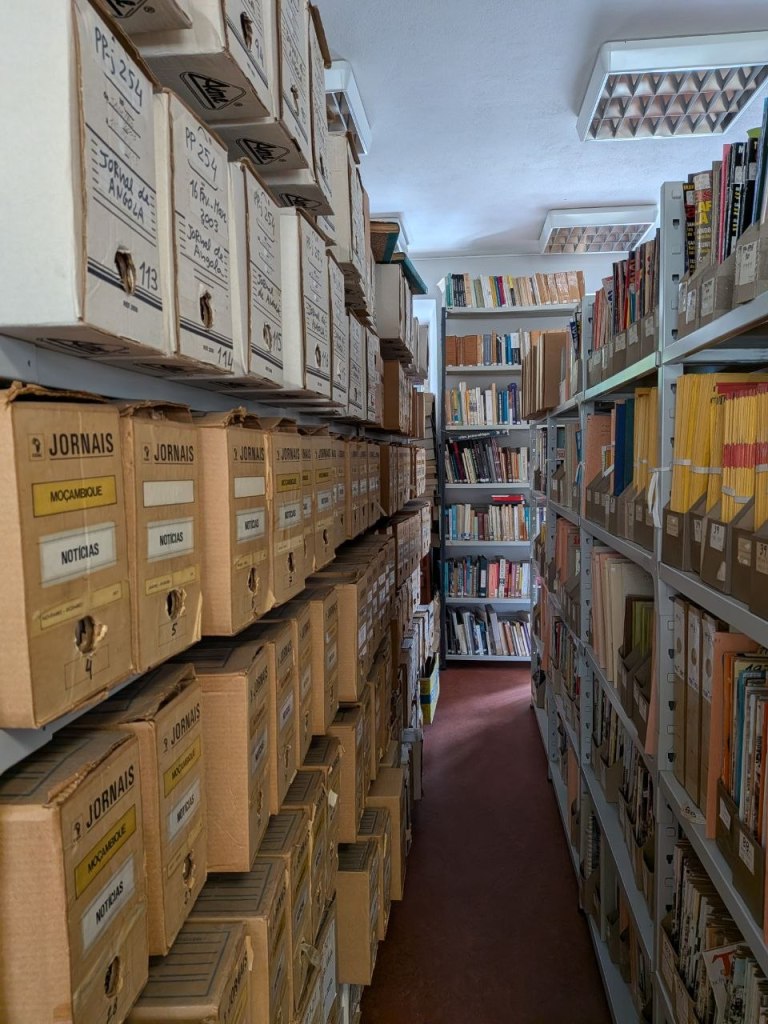
She ended up inviting me to join her for a visit to the only fair trade shop in the whole of Portugal – which I gladly accepted without hesitation. It was one thing to be listening to research presentations on the social and solidarity economy, and totally another to be right where the action is at. I truly appreciated not just the warmth and passion of Steve (I hope I got the name correct) and Christina, but their clarity and depth of thought in what their vision and strategy was to create change in the world. Behind and above (literally) that humble shop with fair trade wares was a well-formed idea of what kind of fair trade they wanted to be without compromise, a critical history on the intersection of third sector and the powers of the day across Portugal and African countries that informs the movement, and lastly, a space for like-minded associations and individuals to gather. Listening to Christina’s sharing and touching a piece of written history in their archival library, my hairs stood on end as I connected with the energy of these countless individuals who’d believed in social justice for all.
This connects also with the positive energy of ISTR conference which reflects the shared ethos that the academics and practitioners have in their third sector work. While there has been much discussion on the shrinking third sector space in Portugal and around the world, there is a shared hope around how, as one academic put it, “civil society always finds a way to rise up from the ground”.

